
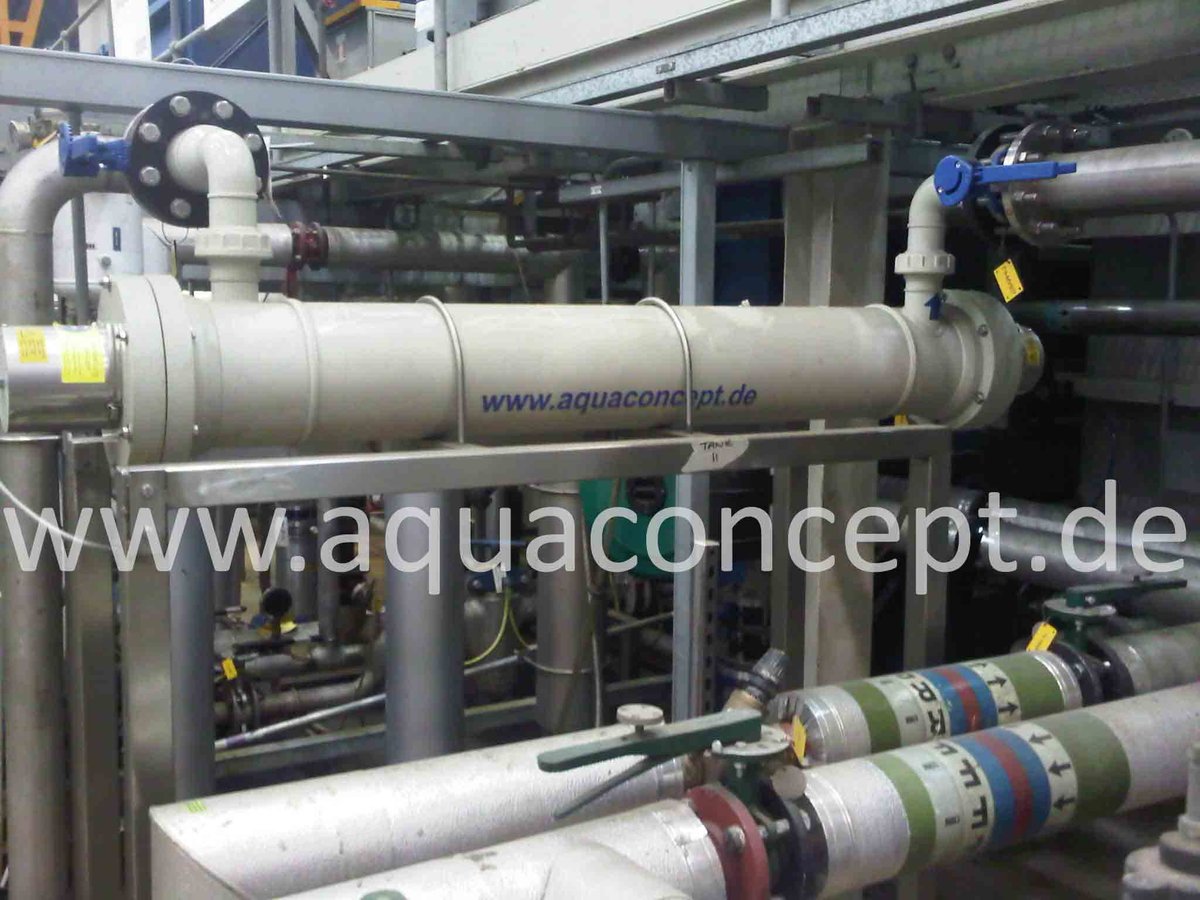
MicroUV®-BASIC
The full performance disinfection UV-reactor with great advantage in pricing!
The full performance disinfection UV-reactor with great advantage in pricing. Developed and produced for standard applications from 5 to 40 m³/h with low material requirements. The Basic series is designed as a low-cost product in PP and is therefore suitable for cold water applications up to 6 bar and in the hot water range up to 4 bar pressure resistance.
These are UV disinfection reactors that are intended to cover price-sensitive market segments.
Information on the theoretical background of the elimination of microorganisms and the reactor design can be found in the section 'Theory of UV disinfection reactors' on our website!
If you are interested, we will be happy to help you!
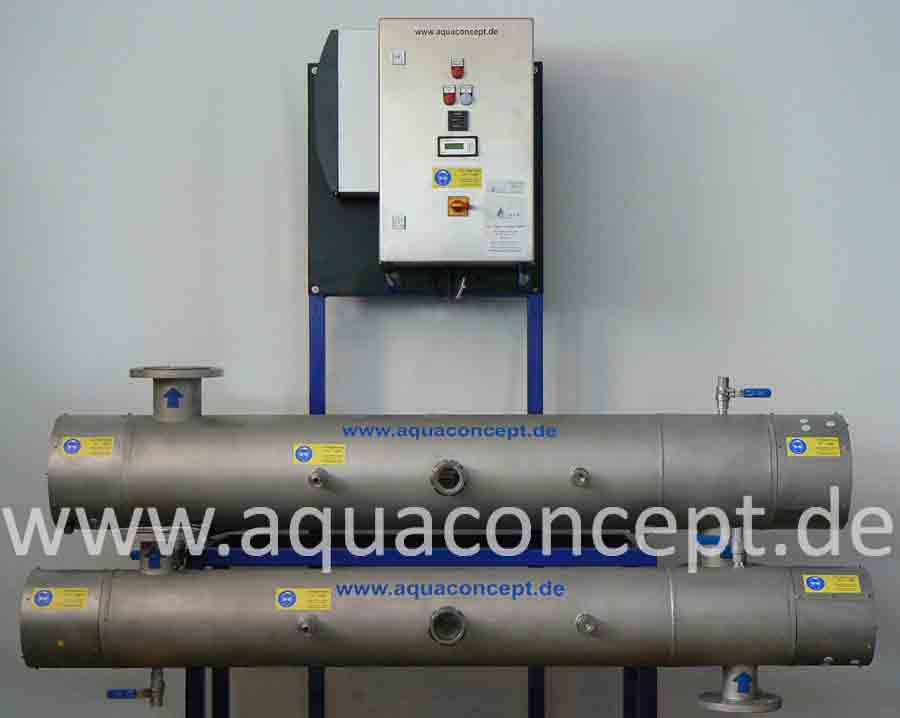
MicroUV®-NT
The reactor generation for large-scale use
The reactor generation for large-scale use from 20 to 1000 m³ / h.
These reactors are made of stainless steel according to your specific requirements and can be equipped with a whole range of accessories.
The abrasive effect of the rotating flow cleans the reactor continuously and can be perfected by combining it with the Rotaclean® mechanical cleaning device. The NT series are large reactors that are only made of stainless steel (different qualities). The entire technical equipment is designed for the special customer requirements.
If you are interested, we will be happy to help you!
Rotaclean®
Mechanical cleaning system; constructed without engine and seals
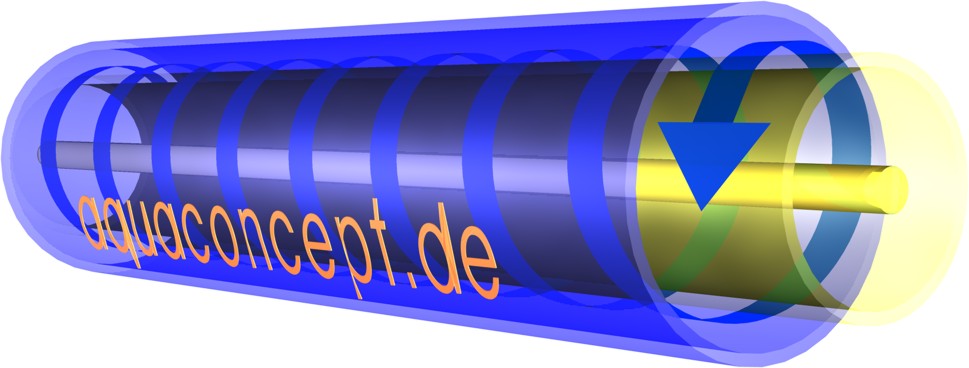
The Rotaclean® is a mechanical cleaning device that works without a motor (external drive) or seals.
This makes the unit very inexpensive and reliable. The drive is the hydraulic force of the moving flow, which then causes the Teflon wiper to tumble randomly over the surface of the quartz protective tube.
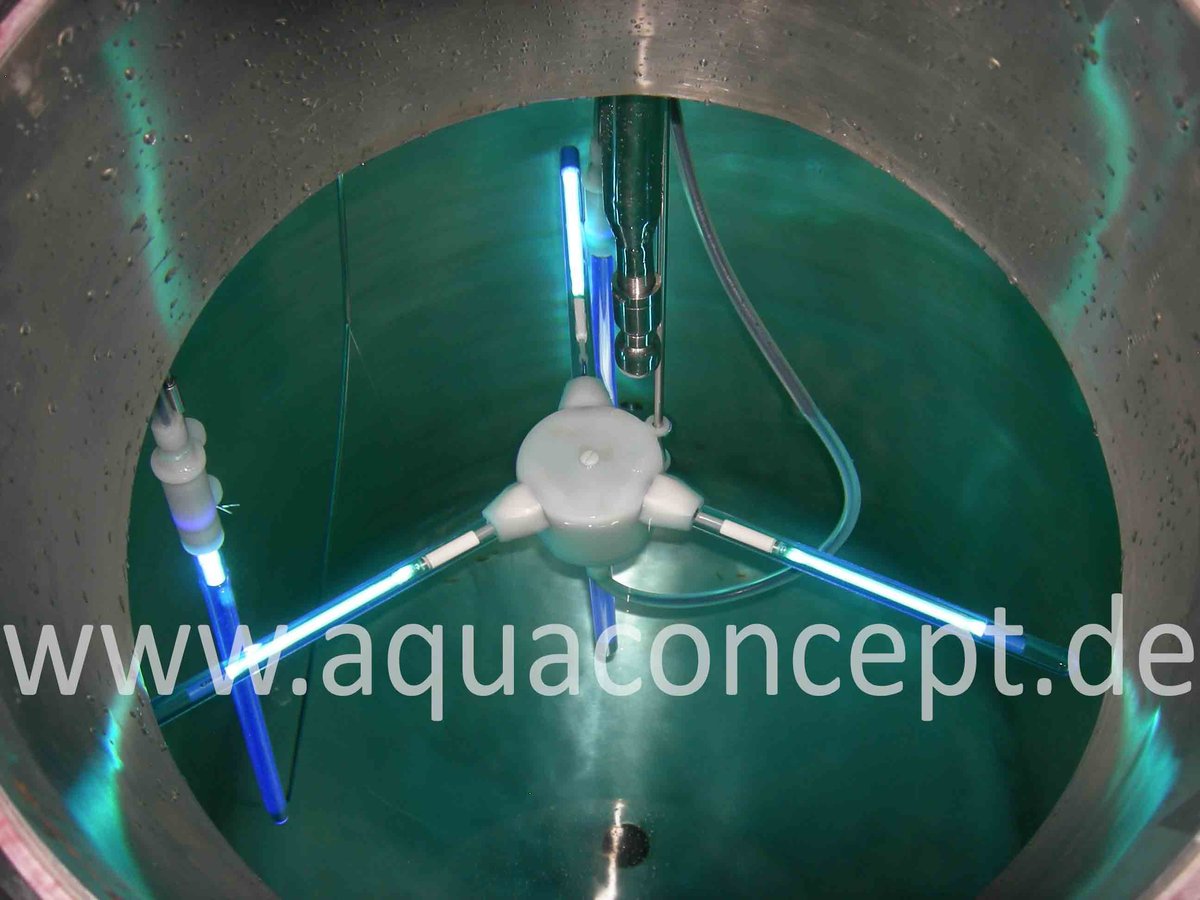
UV-Disinfection integrated in existing tanks
The intelligent alternative!
When you want to disinfect a tank with UV, you will be better off, with our tank disinfection: Integration of Microfloat® und Microspear® in the tank, will transform your tank into an UV-reactor with a lot of advantages, e.g.:
- Lower investment costs
- Higher effect
With the UVC - tank disinfection with Microfloat® and Microspear® as well as our UV reactor series MicroUV®-NT and MicroUV®-Basic we offer a wide range of devices for UV disinfection.